In 2024, we premiered the film “BATTLE of the BLUES” at our first annual Whale of a Celebration event. We were thrilled at the opportunity to help produce this film with Adam Ernster Wildlife, and Protecting Blue Whales and Blue Skies. Since then, the film has done its rounds and has had a powerful impact, speaking to the true power of ocean education, literacy, and conservation filmmaking.
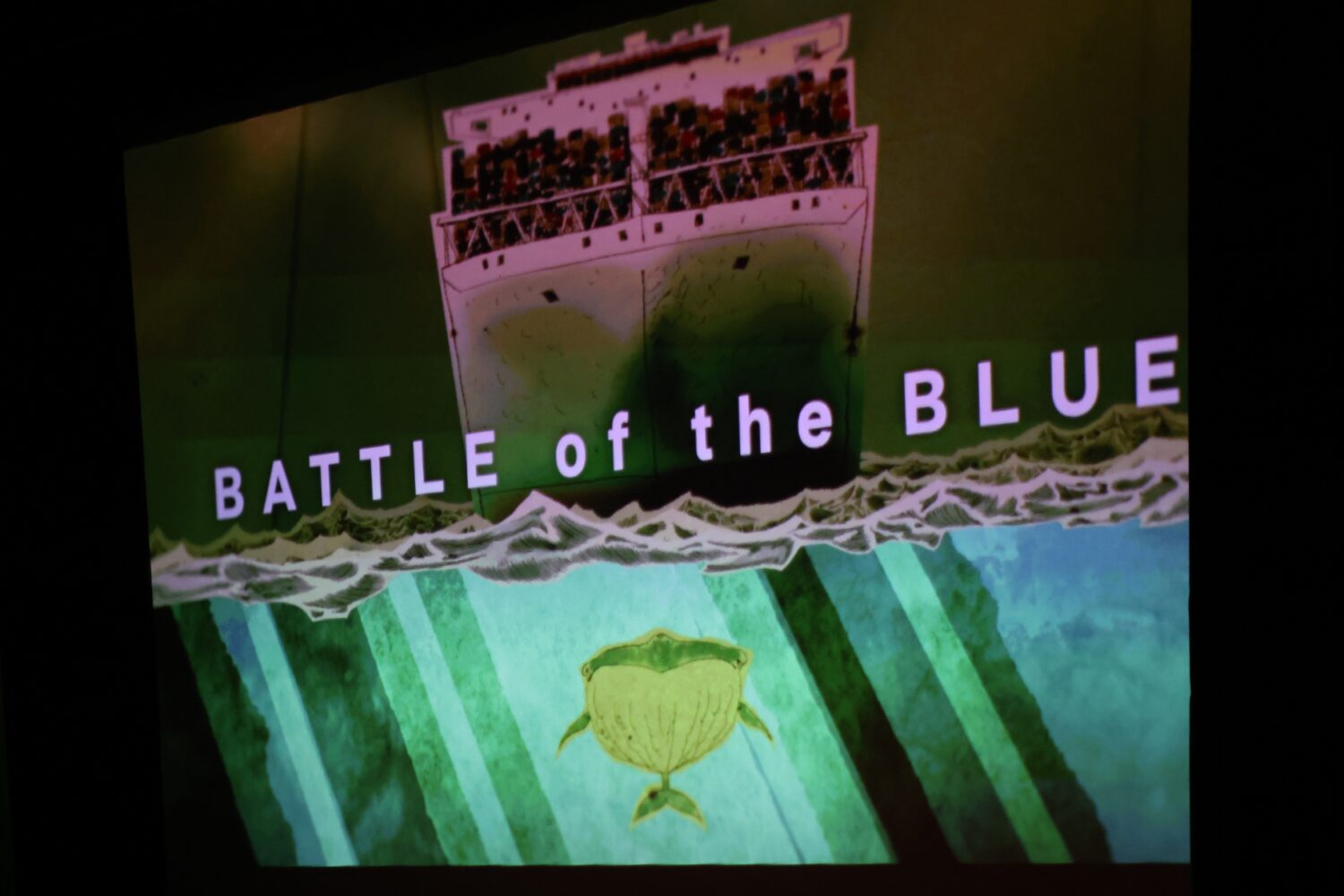
The film has been shown in 7 different festivals so far. Ranging from local festivals like the Santa Barbara International Film Festival and International Ocean Film Festival, to faraway festivals like the World Whale Film Festival. However, the showing that has had the most impact was a 2026 showing at the Blue Whale Film Festival in Loreto, Baja California Sur.
In 2026, BATTLE of the BLUES was beautifully dubbed into Portuguese and Spanish thanks to the efforts of ocean advocate Rubén D. Arvizu, sound engineer Gerardo Suárez, and their dedicated team, allowing the film to reach a far broader audience across Latin America. That expanded audience matters. Whales do not recognize political boundaries, national borders, or human divisions. As highly migratory animals, their survival depends on the collective stewardship of many nations and communities. Blue whales, like all great whales, give birth in warm tropical waters before undertaking remarkable journeys to colder, nutrient-rich feeding grounds. The whales we encounter off the California coast begin their lives elsewhere; in the Northeastern Pacific, important calving areas include the waters off Baja California and Costa Rica.
Following its translation, the film was screened at the Blue Whale Festival in Loreto, Mexico—one of the world’s premier destinations for observing blue whales and an important habitat within their migratory range. The screening underscored the importance of sharing conservation stories in culturally relevant and accessible ways, connecting the people who live alongside these animals with the science and stewardship needed to protect them.


What began as a modest effort to screen BATTLE of the BLUES to support local ocean literacy efforts evolved into an extraordinary community movement for blue whale conservation. The January 28 screening filled Plaza Salvatierra and sparked widespread discussion among residents, scientists, tourism operators, educators, and local officials about maritime traffic, underwater noise, and the future of Loreto Bay’s marine ecosystems. When the Mexican Federal Government later issued a decree changing Loreto’s port status to allow international vessel traffic, many feared increased shipping activity in one of the Gulf of California’s most important blue whale habitats. In response, an unprecedented coalition of citizens, fishers, business owners, researchers, artists, and environmental organizations mobilized through demonstrations, public forums, scientific outreach, and a petition campaign that gathered more than 270,000 verified signatures.
These collective efforts helped achieve a remarkable outcome: federal authorities temporarily halted international vessel arrivals and ultimately repealed the decree, while establishing a formal working group to shape future navigation regulations for Loreto. Throughout the process, the themes explored in BATTLE of the BLUES became central to the public conversation, demonstrating the power of accessible science communication to inform civic engagement. An excerpt from the documentary featuring Dr. John Calambokidis reached more than 77,000 viewers across Latin America and beyond, highlighting a broader regional appetite for culturally relevant conservation storytelling. The experience in Loreto has shown that when communities are empowered with understandable, science-based information, they can play a meaningful role in protecting marine ecosystems and influencing public policy—not only locally, but across other coastal regions facing similar challenges.
“Perhaps the most important lesson from the past few months is this: Loreto has become an example of how science communication and ocean literacy can empower communities. When people are given access to understandable science, they are better able to participate in decisions affecting their marine environment. In our case, “Battle of the Blues” helped transform a highly technical discussion about underwater noise, maritime traffic, and blue whale conservation into a broad public conversation involving citizens, tourism operators, fishers, scientists, educators, and government officials.”
Fernando Martín Velazco
Loreto SoundLab
An excerpt from the film circulated on social media, amassing over 2 million views across various channels. It is the perfect example of how commerce and conservation can coexist in today’s world.
With whales of gratitude,
The SBCWHA Team